

Description
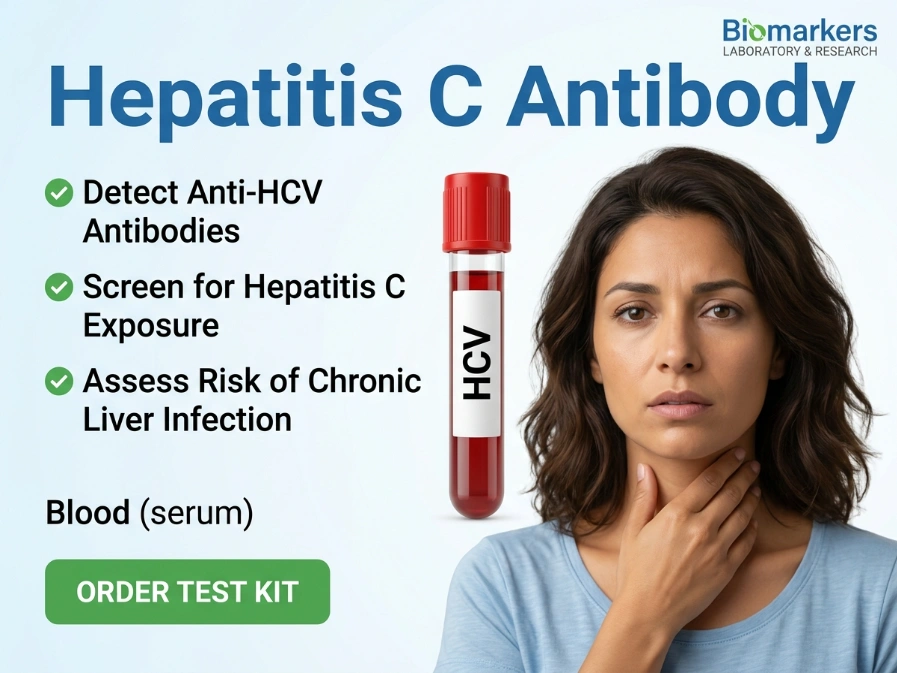
The Hepatitis C Antibody Test from BiomarkersLabs.com detects IgG antibodies against Hepatitis C virus (HCV) — the primary initial screening test for HCV infection and a cornerstone of the global effort to identify and treat the estimated 58 million people living with chronic HCV infection worldwide. HCV is a single-stranded RNA virus transmitted primarily by blood-to-blood contact — most commonly through injecting drug use (sharing needles or equipment), blood product exposure before universal HCV screening was implemented (before 1992 in most countries), tattooing and piercing with unsterile equipment, and less commonly through sexual contact or vertical transmission. Chronic HCV infection develops in approximately 75–85% of acutely infected individuals — silently progressing over decades to liver fibrosis, cirrhosis, and hepatocellular carcinoma without producing symptoms until advanced disease is established. HCV is now curable in over 95% of cases with 8–12 weeks of direct-acting antiviral (DAA) therapy — making early identification and treatment one of the most impactful interventions in modern hepatology. Anti-HCV antibody becomes detectable at 8–11 weeks after exposure (the serological window period) and persists indefinitely after both treated and untreated infection — it does not indicate active infection or immunity and must be confirmed by HCV RNA PCR for current infection status. Specimens processed through CLIA-certified partner laboratories. Results delivered within 1–3 business days. Available in USA · EU · UK · Canada. Licensed practitioners only.
What does this test measure?
Anti-HCV (Hepatitis C Antibody IgG) — Detection of IgG antibodies against HCV antigens. A reactive (positive) result indicates past or current HCV exposure. It does not distinguish active infection from resolved or treated infection. All reactive anti-HCV results require follow-up HCV RNA PCR testing to confirm or exclude active viraemic infection and determine whether current treatment is needed.
Clinical indications
Hepatitis C screening in at-risk patients — current or former injecting drug users (the highest-risk group), men who have sex with men, HIV-positive individuals, incarcerated or formerly incarcerated individuals, and individuals from high-prevalence countries.
Unexplained elevated liver enzymes — anti-HCV is included in the standard liver disease workup for any patient with unexplained ALT or AST elevation.
Intravenous drug use history HCV screening — universal one-time HCV screening is recommended for all individuals who have ever injected drugs.
Pre-treatment HCV baseline — establishing HCV status before initiating immunosuppressive therapy where HCV reactivation is a consideration.
Blood product exposure screening — individuals who received blood transfusions, organ transplants, or blood products before universal HCV screening was implemented (before 1992 in most countries) should be screened.
Cirrhosis aetiology workup — HCV is the leading cause of liver cirrhosis and hepatocellular carcinoma in many countries; anti-HCV is mandatory in any cirrhosis investigation.
Universal birth cohort screening — the CDC and USPSTF recommend one-time HCV antibody screening for all adults aged 18–79.
Sample type and collection
Blood (serum). No fasting required. 1–3 business days. USA · EU · UK · Canada. No New York restriction. CLIA · IVDR · CE · HIPAA · GDPR · PIPEDA.
How to order
Register free at BiomarkersLabs.com. Licensed practitioners only. Pay per test.
FAQ
Does a positive HCV antibody result mean the patient has active hepatitis C?
No — a positive anti-HCV antibody result means the patient has been exposed to HCV at some point. Approximately 15–25% of acutely infected individuals clear the virus spontaneously. All reactive anti-HCV results require follow-up HCV RNA PCR testing to confirm whether active viraemia is present and treatment is required. Anti-HCV antibody persists even after successful DAA treatment — it cannot be used to confirm treatment cure. HCV RNA PCR (viral load) at 12 weeks after treatment completion (SVR12) is the definitive cure marker.


Reviews
There are no reviews yet.