

Description
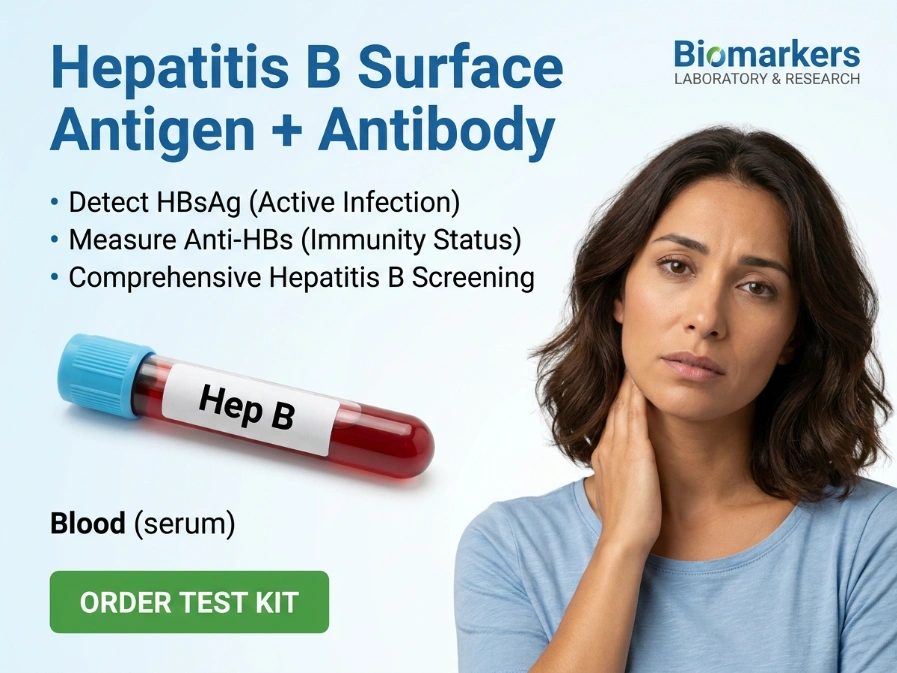
The Hepatitis B Surface Antigen and Antibody Panel from BiomarkersLabs.com measures two key Hepatitis B virus (HBV) markers — Hepatitis B surface antigen (HBsAg) and Hepatitis B surface antibody (anti-HBs) — providing the initial HBV status assessment that distinguishes active infection, resolved infection with natural immunity, vaccination-induced immunity, and susceptibility to infection in a single panel. HBV is a partially double-stranded DNA virus transmitted by sexual contact, blood-to-blood exposure, and vertical mother-to-child transmission, infecting approximately 296 million people globally and causing an estimated 820,000 deaths per year from liver cirrhosis and hepatocellular carcinoma. HBsAg is the viral surface protein expressed on the HBV outer envelope — its detection in blood indicates that replicating HBV is present, confirming current infection. Anti-HBs is the protective antibody generated either by vaccination or by resolution of natural infection — its presence indicates immunity to future HBV infection. Specimens processed through CLIA-certified partner laboratories. Results delivered within 1–3 business days. Available in USA · EU · UK · Canada. Licensed practitioners only.
What does this panel measure?
HBsAg (Hepatitis B Surface Antigen) — Detects active HBV infection. Positive HBsAg indicates current HBV infection (acute or chronic). Persistence for more than 6 months defines chronic HBV infection.
Anti-HBs (Hepatitis B Surface Antibody) — Protective antibody. Positive anti-HBs with negative HBsAg indicates either resolved natural infection with immunity or vaccination immunity. Values above 10 IU/L are considered protective.
Result interpretation
HBsAg positive, anti-HBs negative: active HBV infection (acute or chronic) — requires further HBV panel workup (HBeAg, anti-HBe, HBV DNA, anti-HBc).
HBsAg negative, anti-HBs positive (above 10 IU/L): immune — either from vaccination or resolved natural infection (anti-HBc measurement differentiates these).
HBsAg negative, anti-HBs negative: susceptible — no prior infection or vaccination; vaccination recommended.
HBsAg positive, anti-HBs positive: rare pattern — may indicate chronic infection with mutant HBV or immunological complexity requiring specialist assessment.
Clinical indications
Hepatitis B screening in at-risk populations — sexual contacts of HBV-infected individuals, men who have sex with men, injecting drug users, healthcare workers, individuals from high-prevalence regions, and patients with multiple sexual partners.
Differentiating active HBV infection from vaccination immunity — essential before initiating antiviral treatment or making vaccination decisions.
Pre-chemotherapy or immunosuppression HBV screening — HBV reactivation during immunosuppressive therapy can be severe and fatal; HBsAg and anti-HBs (and anti-HBc) screening before rituximab, corticosteroids, TNF inhibitors, and other immunosuppressants guides prophylactic antiviral decisions.
Occupational healthcare worker HBV surveillance — confirming and documenting protective anti-HBs titres after vaccination.
Antenatal HBV screening — universal antenatal HBsAg screening identifies HBsAg-positive mothers whose infants require immediate post-natal HBV vaccination and HBIG to prevent vertical transmission.
Sample type and collection
Blood (serum). No fasting required. 1–3 business days. USA · EU · UK · Canada. No New York restriction. CLIA · IVDR · CE · HIPAA · GDPR · PIPEDA.
How to order
Register free at BiomarkersLabs.com. Licensed practitioners only. Pay per test.


Reviews
There are no reviews yet.