

Description
What is the hs-CRP (High Sensitivity C-Reactive Protein) Test?
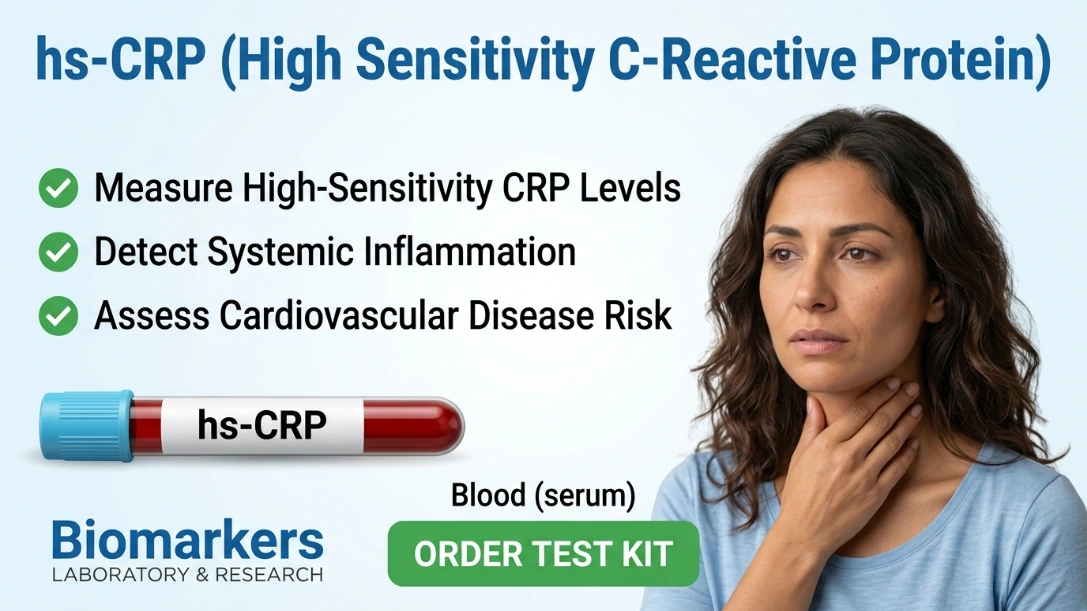
The hs-CRP Test from BiomarkersLabs.com measures high-sensitivity C-reactive protein — a highly sensitive assay for the detection of low-grade, chronic systemic inflammation at concentrations that standard CRP assays cannot reliably detect. C-reactive protein is an acute phase protein produced by the liver in response to interleukin-6 (IL-6) and other pro-inflammatory cytokines released during tissue injury, infection, or immune activation. In standard clinical chemistry, CRP is used to detect and monitor overt inflammation — acute infections, autoimmune flares, and post-surgical states — where values typically range from 10 to several hundred mg/L. The high-sensitivity CRP (hs-CRP) assay is a fundamentally different clinical application of the same protein, operating at a detection range one hundred to one thousand times lower — measuring CRP in the 0.1–10 mg/L range — to identify the chronic, low-grade vascular inflammation that drives atherosclerotic plaque formation, destabilisation, and rupture in patients with apparently normal or mildly elevated standard inflammatory markers. Specimens are processed through CLIA-certified partner laboratories (Quest Diagnostics and LabCorp) for USA orders, with IVDR-compliant partner laboratories serving EU and UK practitioners. Results are delivered to your secure BiomarkersLabs.com practitioner portal within 1–3 business days of specimen receipt.
The cardiovascular evidence base for hs-CRP is among the most robust of any inflammatory biomarker in medicine, built over more than two decades of large-scale prospective research. The landmark JUPITER trial — a randomised controlled trial of 17,802 apparently healthy individuals with normal LDL cholesterol but elevated hs-CRP above 2.0 mg/L — demonstrated that statin therapy significantly reduced cardiovascular events in this population, establishing hs-CRP elevation as an actionable treatment trigger in primary prevention. The Physicians’ Health Study, the Women’s Health Study, and multiple prospective cohort analyses have confirmed that hs-CRP independently predicts myocardial infarction, stroke, peripheral arterial disease, and sudden cardiac death across diverse populations — with relative risks increasing progressively across hs-CRP tertiles even after full adjustment for LDL cholesterol, blood pressure, diabetes, smoking, and other traditional risk factors. The American Heart Association and Centers for Disease Control and Prevention jointly classify hs-CRP into three cardiovascular risk categories: low risk below 1.0 mg/L, average risk 1.0–3.0 mg/L, and high risk above 3.0 mg/L. The ESC similarly recognise hs-CRP as a risk-enhancing marker in cardiovascular risk assessment guidelines.
The mechanistic basis for hs-CRP’s cardiovascular association extends beyond its role as a passive marker of vascular inflammation — CRP has direct pro-inflammatory and pro-atherogenic effects at the vessel wall. CRP activates complement, stimulates endothelial cells to express adhesion molecules that recruit monocytes into the arterial wall, promotes macrophage foam cell formation, induces endothelial dysfunction by suppressing nitric oxide synthase, and destabilises atherosclerotic plaques by stimulating metalloproteinase expression. These effects mean that hs-CRP is not merely reflecting inflammatory risk but is itself a contributor to the inflammatory-atherogenic process it measures. This mechanistic participation reinforces its value as a cardiovascular risk biomarker and supports the clinical rationale for its use alongside lipid markers in comprehensive cardiovascular risk assessment. CLIA-certified (USA) and IVDR-compliant (EU/UK). Licensed practitioners only through BiomarkersLabs.com.
What does this test measure?
hs-CRP (High-Sensitivity C-Reactive Protein) — The serum concentration of C-reactive protein measured using a high-sensitivity immunoassay capable of detecting values as low as 0.1 mg/L — one to three orders of magnitude more sensitive than standard CRP assays. Results are reported in mg/L with the AHA/CDC cardiovascular risk classification: below 1.0 mg/L is low cardiovascular risk; 1.0–3.0 mg/L is average cardiovascular risk; and above 3.0 mg/L is high cardiovascular risk. Values above 10 mg/L suggest acute inflammation or infection rather than chronic low-grade vascular inflammation and should prompt clinical assessment for an acute inflammatory cause before the result is used for cardiovascular risk stratification — in such cases, the test should be repeated after resolution of the acute process to obtain a true chronic baseline. hs-CRP results should always be interpreted in the context of the full clinical picture, concurrent standard lipid markers, and established cardiovascular risk factors — an elevated hs-CRP in the absence of other risk factors carries a different clinical weight than the same value in a patient with borderline LDL-C, metabolic syndrome, and a family history of premature cardiovascular disease.
Clinical indications
Cardiac risk stratification in intermediate-risk patients — hs-CRP is specifically indicated for cardiovascular risk reclassification in patients whose 10-year ASCVD risk falls in the intermediate range of 7.5–20% on standard risk calculators (Pooled Cohort Equations in the USA, SCORE2 in Europe), where the treatment decision is clinically uncertain; an hs-CRP above 2.0 mg/L in this population shifts the risk estimate upward and supports more intensive preventive intervention.
Statin therapy decision support per JUPITER trial criteria — the JUPITER trial established that apparently healthy individuals with LDL-C below 130 mg/dL but hs-CRP above 2.0 mg/L derive significant cardiovascular event reduction from rosuvastatin therapy; hs-CRP measurement is therefore a direct clinical trigger for statin initiation in patients with normal lipids but elevated inflammatory risk — a population not identified by standard lipid panels alone.
Monitoring systemic inflammation in established cardiovascular disease — patients with established atherosclerotic cardiovascular disease, including those who have had myocardial infarction, coronary revascularisation, stroke, or peripheral arterial disease, can be monitored with hs-CRP to assess the ongoing inflammatory burden driving residual cardiovascular risk beyond LDL-C; persistently elevated hs-CRP despite optimal lipid therapy indicates inflammatory residual risk that may be targetable with anti-inflammatory agents including colchicine.
Metabolic syndrome inflammatory component assessment — metabolic syndrome is driven by visceral adipose tissue-derived chronic inflammation; elevated hs-CRP in a patient with metabolic syndrome reflects the systemic inflammatory burden of the syndrome and contributes to overall cardiovascular risk stratification, particularly in patients whose standard lipid markers underestimate their true inflammatory-atherogenic risk.
Screening for subclinical systemic inflammation in asymptomatic patients — low-grade chronic inflammation precedes clinically manifest cardiovascular disease by years to decades; hs-CRP screening in asymptomatic adults as part of preventive cardiovascular assessment identifies patients with elevated inflammatory risk who may benefit from lifestyle modification, dietary anti-inflammatory intervention, and more intensive cardiovascular monitoring before an event occurs.
Residual cardiovascular inflammatory risk assessment in statin-treated patients — statins reduce both LDL-C and hs-CRP through their pleiotropic anti-inflammatory effects; patients on statin therapy with LDL-C at target but persistently elevated hs-CRP above 2.0 mg/L carry significant residual inflammatory cardiovascular risk; this finding supports consideration of anti-inflammatory adjunctive therapy — colchicine (COLCOT and LoDoCo2 trial evidence), low-dose aspirin, or omega-3 fatty acids — to address the inflammatory residual risk component.
Monitoring anti-inflammatory therapeutic interventions — hs-CRP is the primary objective monitoring marker for lifestyle and pharmacological anti-inflammatory interventions; Mediterranean dietary pattern, weight loss, aerobic exercise, omega-3 fatty acid supplementation, aspirin, and colchicine all lower hs-CRP; serial hs-CRP measurement provides objective confirmation that an anti-inflammatory strategy is producing a measurable biological effect.
Pre-treatment inflammatory baseline before initiating statins — documenting baseline hs-CRP before starting statin therapy allows the practitioner to confirm the anti-inflammatory pleiotropic effect of the statin at follow-up; a falling hs-CRP alongside falling LDL-C confirms that the statin is producing its expected dual benefit; a persistently elevated hs-CRP despite LDL-C at target identifies the inflammatory residual risk component requiring additional intervention.
Type 2 diabetes and insulin resistance cardiovascular risk stratification — chronic low-grade inflammation is a central pathophysiological feature of insulin resistance and type 2 diabetes, both of which substantially elevate hs-CRP; in diabetic patients, hs-CRP adds cardiovascular risk information beyond HbA1c, LDL-C, and standard risk factors, and supports more aggressive cardiovascular risk reduction targets.
Comprehensive multi-marker cardiovascular risk profiling — hs-CRP complements lipid markers, ApoB, Lp(a), homocysteine, and other cardiovascular biomarkers in a comprehensive cardiovascular risk profile; the inflammatory dimension captured by hs-CRP is mechanistically independent of the atherogenic lipoprotein dimension captured by lipid markers — measuring both together provides the most complete cardiovascular risk characterisation available in routine clinical practice.
Sample type and collection
Sample Type: Blood (serum)
Fasting Required: No — fasting is not required for hs-CRP measurement. CRP is an acute phase protein that is not affected by recent food intake. The patient may attend their collection appointment at any time of day without fasting preparation. If hs-CRP is ordered as part of a broader cardiovascular panel that includes fasting-dependent markers such as triglycerides or lipid fractions, the fasting requirements of those concurrent markers apply and collection timing should be coordinated accordingly.
Collection Method: Venepuncture at an approved collection site. USA patients attend a Quest Diagnostics or LabCorp patient service centre using the requisition generated through your BiomarkersLabs.com portal. EU, UK, and Canada patients are directed to partner collection networks in their region.
Specimen Timing Note: hs-CRP is an acute phase reactant and rises dramatically during acute infection, acute inflammatory conditions, recent surgery, trauma, and acute cardiovascular events. A result taken during an acute illness — even a mild upper respiratory tract infection — will be substantially elevated and does not reflect the patient’s chronic baseline inflammatory status relevant to cardiovascular risk assessment. If the patient is acutely unwell at the time of the planned appointment, collection should be deferred until at least two to three weeks after full clinical recovery. For cardiovascular risk assessment purposes, two measurements separated by two or more weeks are recommended to confirm a persistently elevated chronic baseline, as transient elevations from minor infections are common and clinically misleading if taken as a single result.
Turnaround time
1–3 business days from specimen receipt at the processing laboratory. Turnaround begins upon confirmed specimen receipt — not from the date of patient collection. The ordering practitioner receives an automated email notification when results are available in their BiomarkersLabs.com practitioner portal. Results are never sent to the patient and are not accessible outside the verified practitioner portal.
Availability
USA · EU · UK · Canada
Available to licensed practitioners ordering for patients in all US states. This test does not carry a New York state restriction — it can be ordered for patients in New York without limitation. For EU, UK, and Canadian practitioners, ordering and collection logistics are managed through your BiomarkersLabs.com portal on registration.
Compliance and certifications
CLIA Certified — All USA specimens processed by CLIA-certified Quest Diagnostics and LabCorp partner laboratories meeting federal standards for clinical laboratory quality.
IVDR Compliant — EU and UK specimens processed in compliance with the EU In Vitro Diagnostic Regulation (EU) 2017/746.
CE Marked — All diagnostic assays used for EU and UK specimens carry CE marking confirming conformity with applicable European IVD standards.
HIPAA Compliant — All USA patient data handled in full compliance with HIPAA. Results delivered to the ordering practitioner’s portal only — never to the patient.
GDPR Compliant — All EU and UK practitioner and patient data processed in accordance with the General Data Protection Regulation.
PIPEDA Compliant — Canadian data handled in compliance with the Personal Information Protection and Electronic Documents Act.
How to order
This test is available exclusively to licensed healthcare practitioners. Register free at BiomarkersLabs.com — licence verification takes 1–2 business days. USA practitioners with a valid NPI number are verified automatically. Once your account is active, search for the hs-CRP Test in your portal, enter patient details, and submit the order. Your patient receives a requisition to attend their nearest approved collection site — no fasting preparation is required. Results are returned to your portal within 1–3 business days of specimen receipt. All pricing is visible after login — no subscription required, pay per test.
This test is available exclusively to licensed healthcare practitioners. Results are delivered to the ordering practitioner’s secure portal only — never directly to patients. Licence verification required (1–2 business days). BiomarkersLabs.com does not accept patient self-referrals.
Frequently Asked Questions — hs-CRP Test
What does the hs-CRP test measure and how is it different from standard CRP?
The hs-CRP test measures C-reactive protein using a high-sensitivity assay capable of detecting concentrations as low as 0.1 mg/L — one to three orders of magnitude more sensitive than standard CRP assays. Standard CRP is designed to detect and monitor overt inflammation — acute infections, autoimmune flares, post-surgical states — where values range from 10 to several hundred mg/L. hs-CRP is designed for a fundamentally different application: detecting the chronic, low-grade subclinical vascular inflammation that occurs in the 0.1–10 mg/L range and that standard CRP assays cannot reliably distinguish from zero. This low-grade inflammatory state is directly relevant to cardiovascular disease risk but produces values that would appear negative on a standard CRP assay.
What are the cardiovascular risk categories for hs-CRP?
The AHA/CDC joint scientific statement classifies hs-CRP into three cardiovascular risk categories for use in primary prevention risk stratification: low risk is below 1.0 mg/L; average risk is 1.0–3.0 mg/L; and high risk is above 3.0 mg/L. A result above 10 mg/L suggests acute inflammation or infection rather than chronic vascular inflammation and should not be used for cardiovascular risk stratification until repeated after resolution of the acute process. For JUPITER trial–based statin decision-making, the threshold of above 2.0 mg/L in patients with LDL-C below 130 mg/dL is the specific clinical trigger validated by the trial.
What was the JUPITER trial and why is it important for hs-CRP clinical use?
The JUPITER trial (Justification for the Use of Statins in Prevention: an Intervention Trial Evaluating Rosuvastatin) was a randomised controlled trial of 17,802 apparently healthy men and women with LDL-C below 130 mg/dL — a level that would not typically trigger statin therapy under standard guidelines — but with elevated hs-CRP above 2.0 mg/L. Participants randomised to rosuvastatin 20 mg daily experienced a 44% reduction in the primary composite cardiovascular endpoint including myocardial infarction, stroke, revascularisation, hospitalisation for unstable angina, and cardiovascular death, compared to placebo. JUPITER established hs-CRP as a clinically actionable treatment trigger for statin therapy in primary prevention patients with normal lipids but elevated inflammatory risk — a population entirely invisible to standard lipid panel–based risk stratification.
What causes elevated hs-CRP beyond cardiovascular disease?
hs-CRP is a non-specific inflammatory marker and is elevated by any cause of systemic inflammation. Acute causes include infection, trauma, surgery, and acute cardiovascular events — results taken during these periods should not be used for cardiovascular risk stratification. Chronic causes that elevate hs-CRP beyond cardiovascular disease include obesity — particularly visceral adipose tissue, which is a major source of IL-6; rheumatoid arthritis and other autoimmune conditions; inflammatory bowel disease; chronic periodontitis; obstructive sleep apnoea; type 2 diabetes and insulin resistance; non-alcoholic steatohepatitis; and chronic psychological stress. When a result is unexpectedly high, these alternative causes should be systematically considered before attributing the elevation solely to vascular inflammation.
How does hs-CRP relate to colchicine and anti-inflammatory cardiovascular therapy?
The COLCOT trial (Colchicine Cardiovascular Outcomes Trial) and LoDoCo2 trial demonstrated that low-dose colchicine (0.5 mg daily) significantly reduces cardiovascular events in patients with established coronary artery disease and in patients with recent myocardial infarction. The proposed mechanism is suppression of NLRP3 inflammasome-driven IL-1β and IL-18 signalling — the same inflammatory pathway that elevates CRP via IL-6. Patients on optimal lipid-lowering therapy with persistent hs-CRP elevation above 2.0 mg/L represent the target population for anti-inflammatory cardiovascular therapy. hs-CRP monitoring before and during colchicine or other anti-inflammatory treatment objectively confirms whether the intervention is suppressing the targeted inflammatory pathway.
Can lifestyle changes lower hs-CRP?
Yes — hs-CRP responds meaningfully to lifestyle modification. Regular aerobic exercise consistently lowers hs-CRP by approximately 20–30% in overweight and sedentary individuals. Weight loss — particularly visceral fat reduction — produces a proportional fall in hs-CRP as adipose-derived IL-6 production decreases. The Mediterranean dietary pattern, which is high in anti-inflammatory omega-3 fatty acids, polyphenols, fibre, and olive oil, lowers hs-CRP in multiple randomised trials. Smoking cessation significantly lowers hs-CRP over months to years. Omega-3 fatty acid supplementation at doses above 2 g EPA+DHA daily produces modest but consistent hs-CRP reduction. Serial hs-CRP measurement every 3–6 months provides objective confirmation of lifestyle intervention efficacy at the inflammatory biology level.
Why might a patient have a very high hs-CRP result (above 10 mg/L)?
A value above 10 mg/L on an hs-CRP assay indicates a degree of systemic inflammation that is above the cardiovascular risk assessment range and suggests an acute or active inflammatory process rather than chronic low-grade vascular inflammation. Common causes include acute bacterial or viral infection, an acute autoimmune flare, acute myocardial infarction or other acute cardiovascular event, recent surgery or trauma, or undiagnosed chronic inflammatory disease presenting acutely. A result above 10 mg/L should not be used for cardiovascular risk stratification — the patient should be clinically assessed for an acute inflammatory cause, managed appropriately, and the hs-CRP repeated two to three weeks after full recovery to obtain a true chronic baseline value.
Is the hs-CRP test available for patients in New York state?
Yes. The hs-CRP test does not carry a New York state restriction. Licensed practitioners in New York can order this test for their patients without limitation through BiomarkersLabs.com.
How quickly will hs-CRP results be available in my practitioner portal?
Results are available in your BiomarkersLabs.com practitioner portal within 1–3 business days from confirmed specimen receipt at the processing laboratory. You receive an automated email notification when results are ready. Results are accessible only through your secure verified portal — they are never sent to the patient and not accessible to anyone outside your practitioner account.



Reviews
There are no reviews yet.